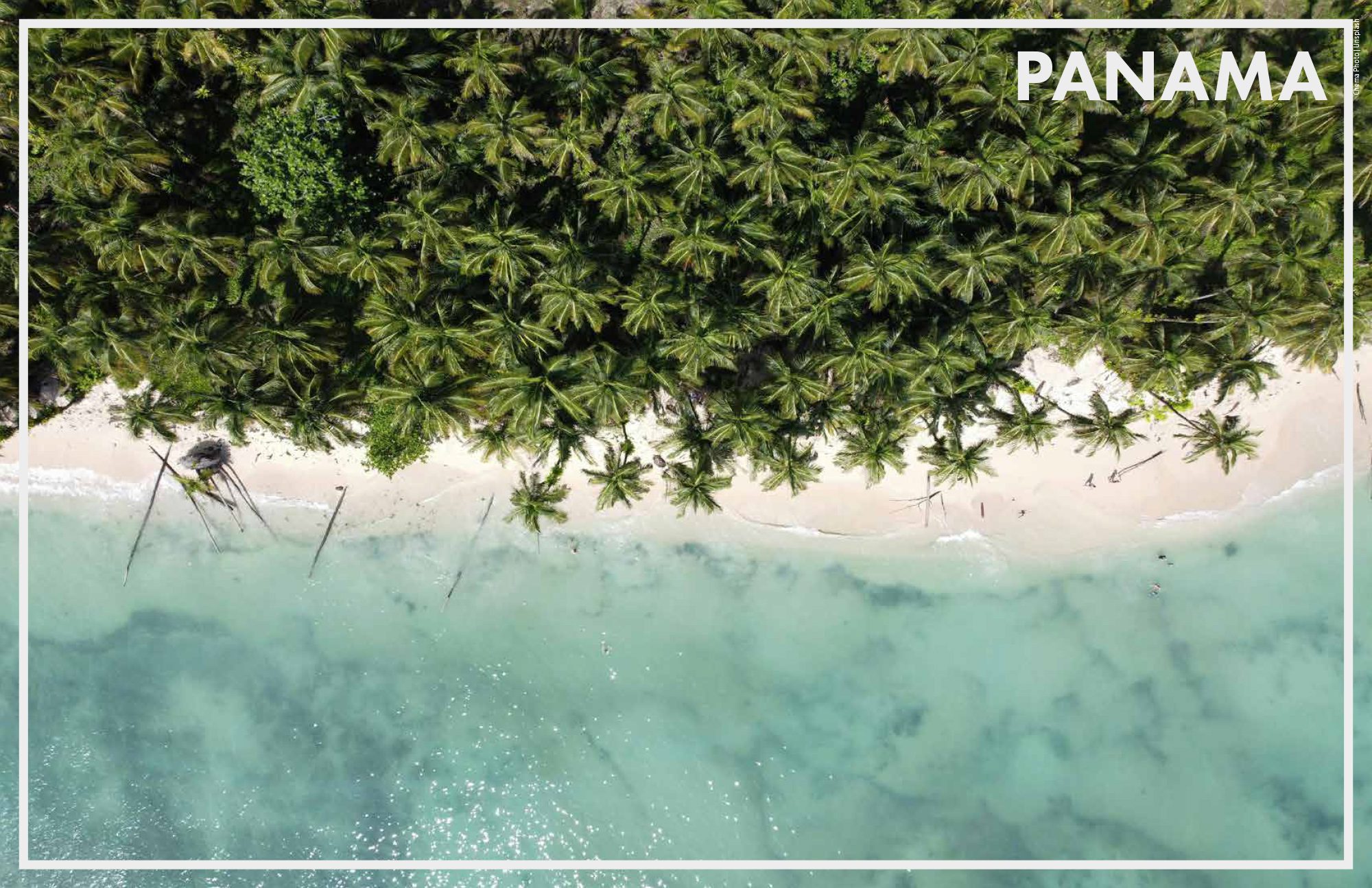
Panama was formed between 15 and 3 million years ago and divided the oceans into the Pacific and Atlantic Oceans. The country belongs to the Central American region and spans an estimated 75,000 km2. Panama’s Exclusive Economic Zone (EEZ) covers an area of 209,779 km2, with the Pacific region covering a larger area (111,087 km2) than the Caribbean region (98,693 km2). Both the Caribbean and Pacific coasts are characterised by numerous ecosystems, including mangroves, corals, and seagrass, which serve as crucial habitats for sharks and rays. In addition, the country includes insular coastal areas, such as Coiba National Park and its special marine protection zone, which sustains an important number of marine species, including several threatened (as per the IUCN Red List of Threatened Species) migratory sharks such as the Scalloped Hammerhead (Sphyrna lewini) and Whale Shark (Rhincodon typus).