Photo: AMATELA.
What is our role in marine conservation?
We’ve all heard that the oceans are important. We see it in campaigns, on social media, in documentaries, and in classrooms. However, there’s one question that remains difficult for many people to answer: What is my role in all of this?
How is a college students in Tegucigalpa connected to a sea turtle that migrates thousands of kilometers across the Caribbean? How can the decisions we make influence species that most of us will never see in the wild? And, more importantly, what can we do to contribute to their conservation?
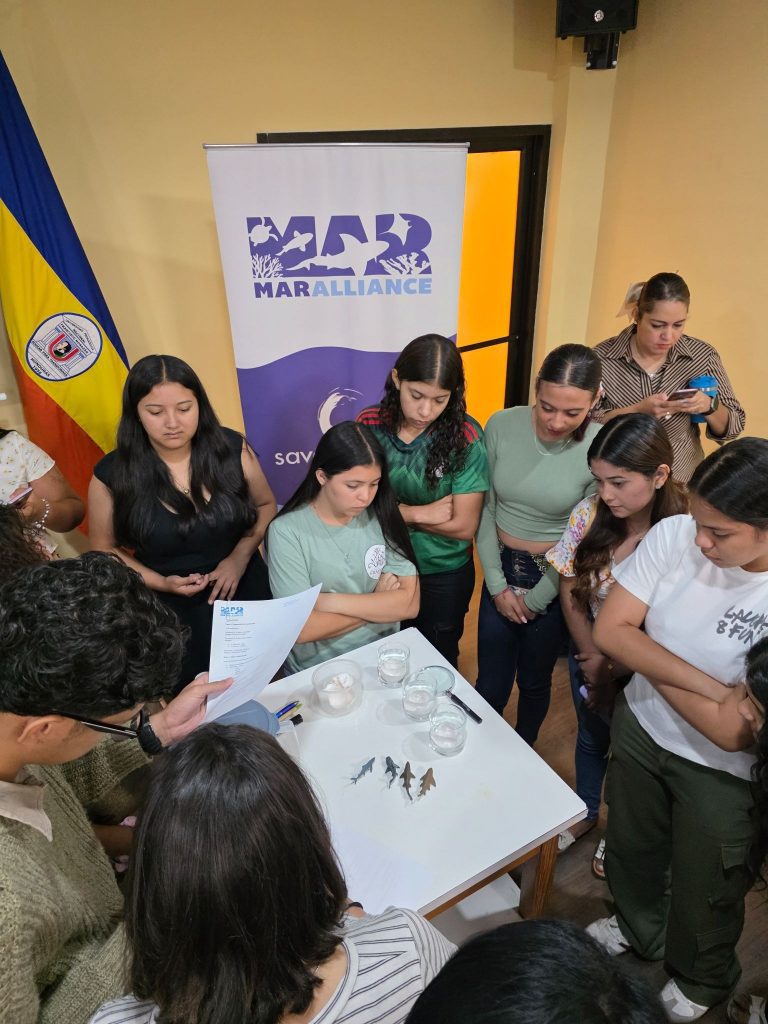
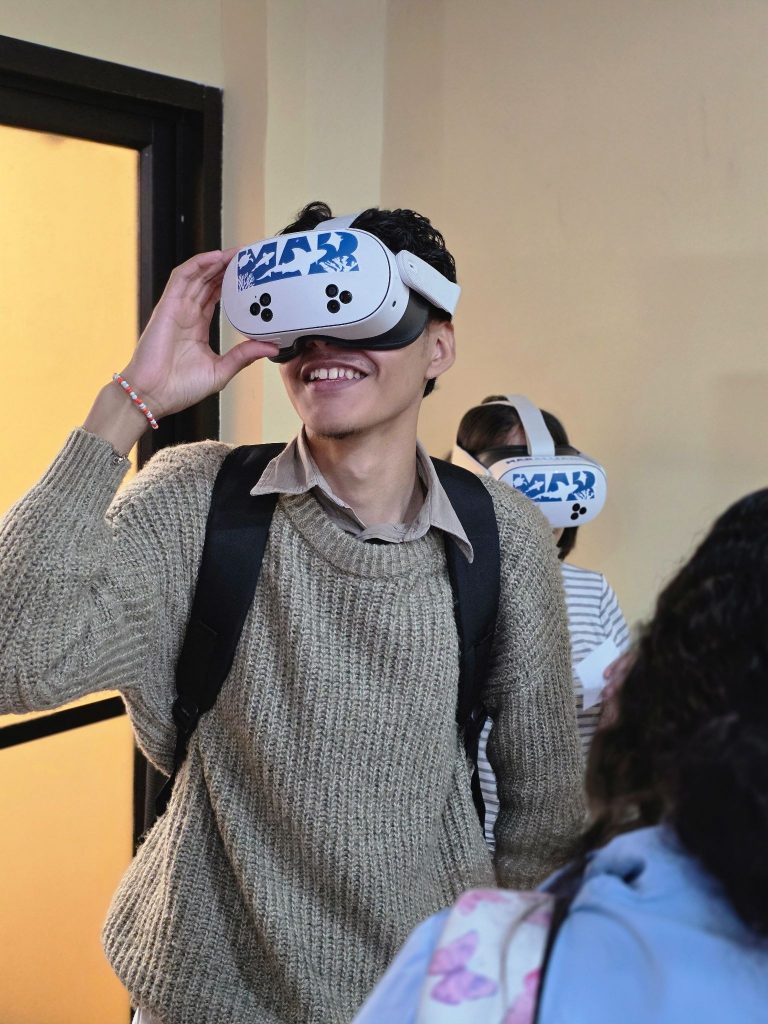
Left: Tourism student the Universidad Pedagógica Nacional Francisco Morazán (UPNFM) explores the impacts of ocean acidification during a MarAlliance educational laboratory. Photo: Jonathan Suazo
Right: Students from the Universidad Pedagógica Nacional Francisco Morazán (UPNFM) experience coral reefs and marine megafauna through MarAlliance’s immersive virtual reality exhibit. Photo: Dissél Reyes
From those questions, Honduras Azul 2026 was born—an extended initiative from our current exhibit launched in 2025, in partnership with the Save Our Seas Foundation, aimed at raising public awareness about the protection of sharks and rays in Honduras. More than just a week of activities, Honduras Azul, emerged as a response to an increasingly evident challenge: the need to transform how we bring marine conservation to society.
From information to experience: a new way of educating
For years, environmental education has focused on sharing information in the hope of creating awareness. However, in an increasingly hyperconnected world, information alone does not always succeed in building meaningful connections. Conservation needs more than just data; it needs experiences capable of sparking curiosity, inspiring reflection, and motivating participation.
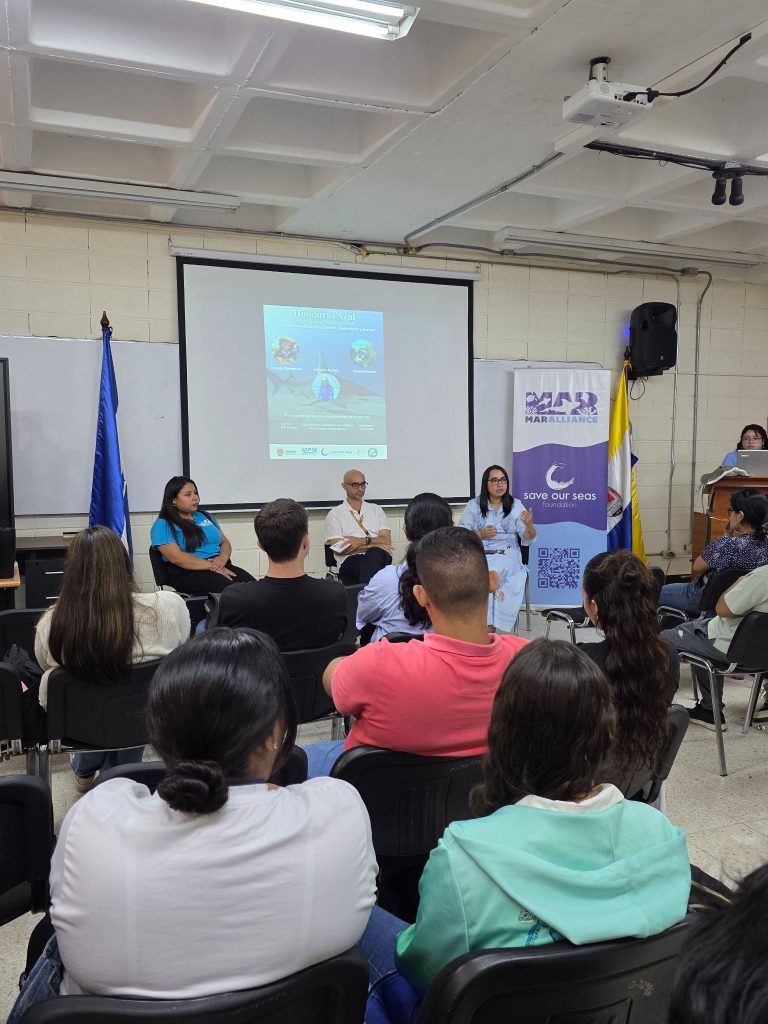
Left: Participants engaging in the “Living Ocean: Science, Community and Action” laboratory at the Universidad Nacional Autónoma de Honduras (UNAH). Photo: Jonathan Suazo
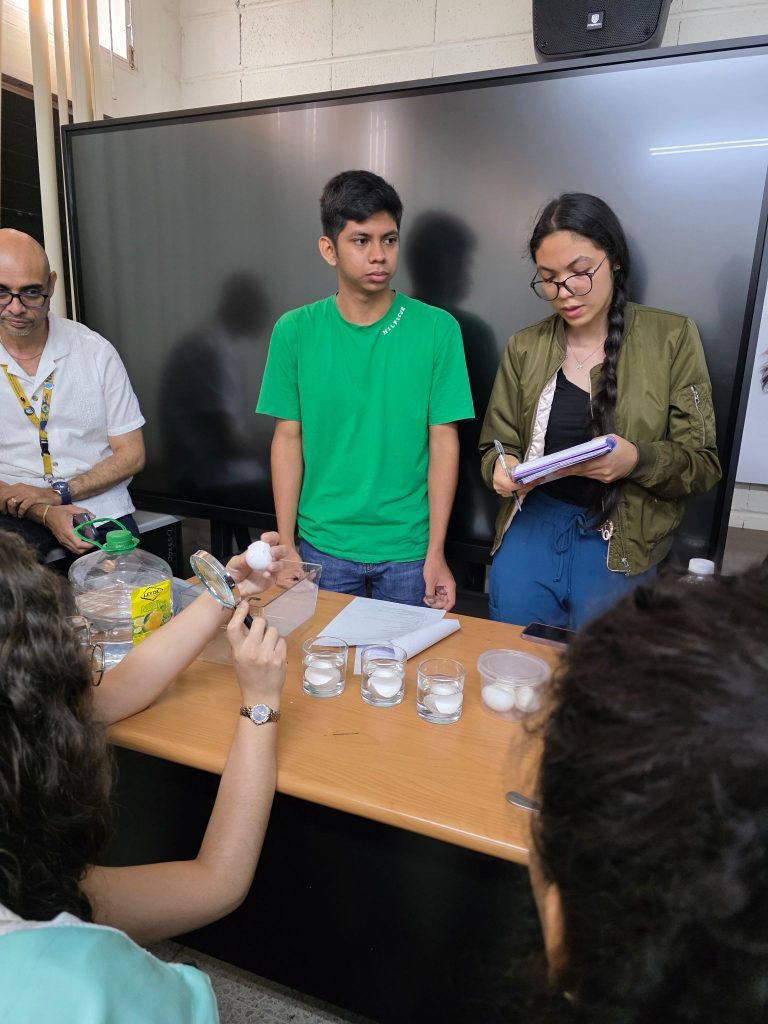
Right: Biology students from the Universidad Nacional Autónoma de Honduras (UNAH) analyze ocean acidification case studies during a MarAlliance educational laboratory. Photo: Dissél Reyes
With this vision in mind, we organized a five-day event to bring marine science closer to the public through opportunities for learning, dialogue, and interaction. Through specialized workshops, educational labs, scientific panels, and immersive experiences, participants had the opportunity to gain firsthand insight into some of the challenges conservationists face in their work to protect species such as sharks, rays, manta rays, and sea turtles. One of the initiative’s main objectives was to transform complex concepts into accessible, relatable experiences, using participatory methodologies that went beyond theory. The labs held throughout the week provided spaces where participants could analyze real-world problems, understand their causes, and visualize the consequences that certain actions have on marine ecosystems.
The Human Role in the Crisis and the Opportunity to Take Action
Rather than simply explaining the challenges of conservation, these forums sought to answer a fundamental question: What role do we play within that reality?
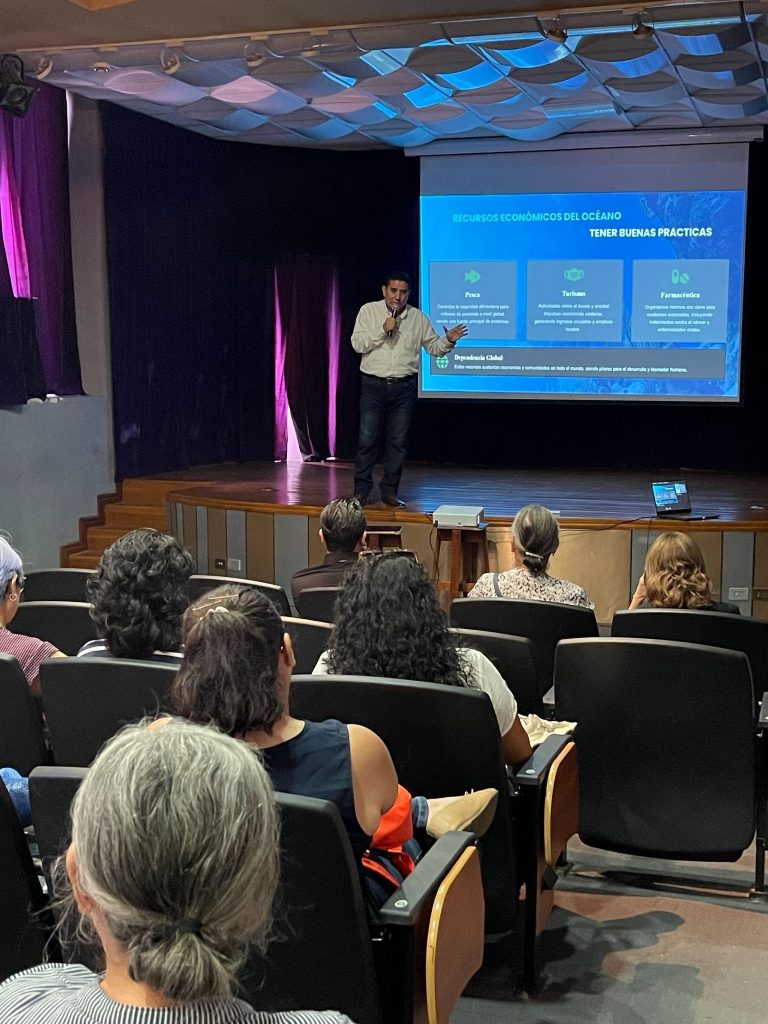
Left: Marine biologist Miguel Suazo delivers the lecture “Oceans Represent Life”. Photo: Jonathan Suazo
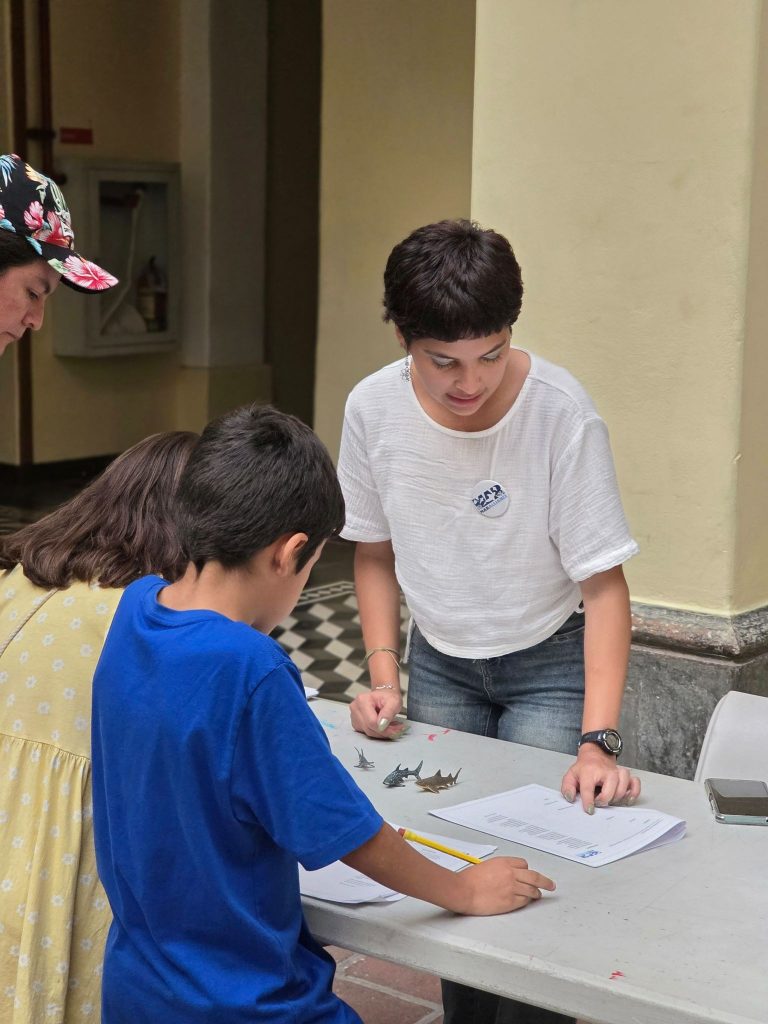
Right: Children participating in the Species Identification Laboratory during the Honduras Azul 2026 Festival. Photo: Jonathan Suazo
The answer isn’t always a comfortable one. Many of the threats facing the oceans are linked to human decisions, consumption patterns, unsustainable practices, and, at times, indifference to issues that seem distant. However, understanding that connection also allows us to identify opportunities for action.
Connecting people, science, and conservation
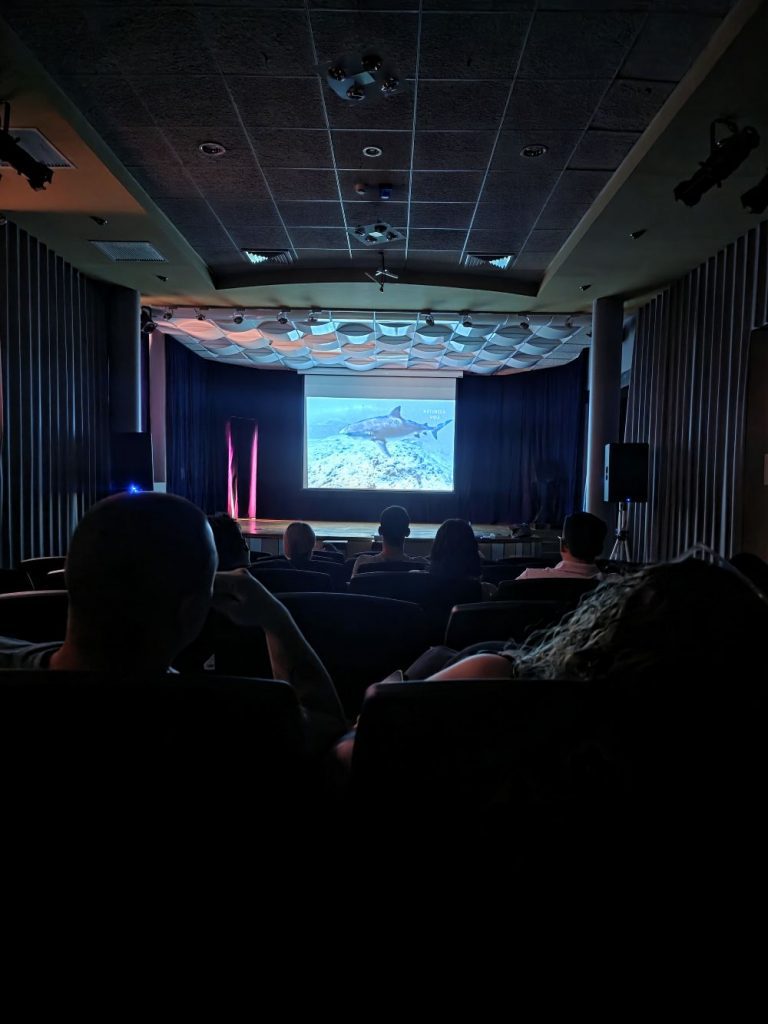
Left: Screening of the documentary “Caribbean: The Wild Side of Paradise” during the Honduras Azul 2026 Festival at the Museo para la Identidad Nacional (MIN). Photo: Dissél Reyes
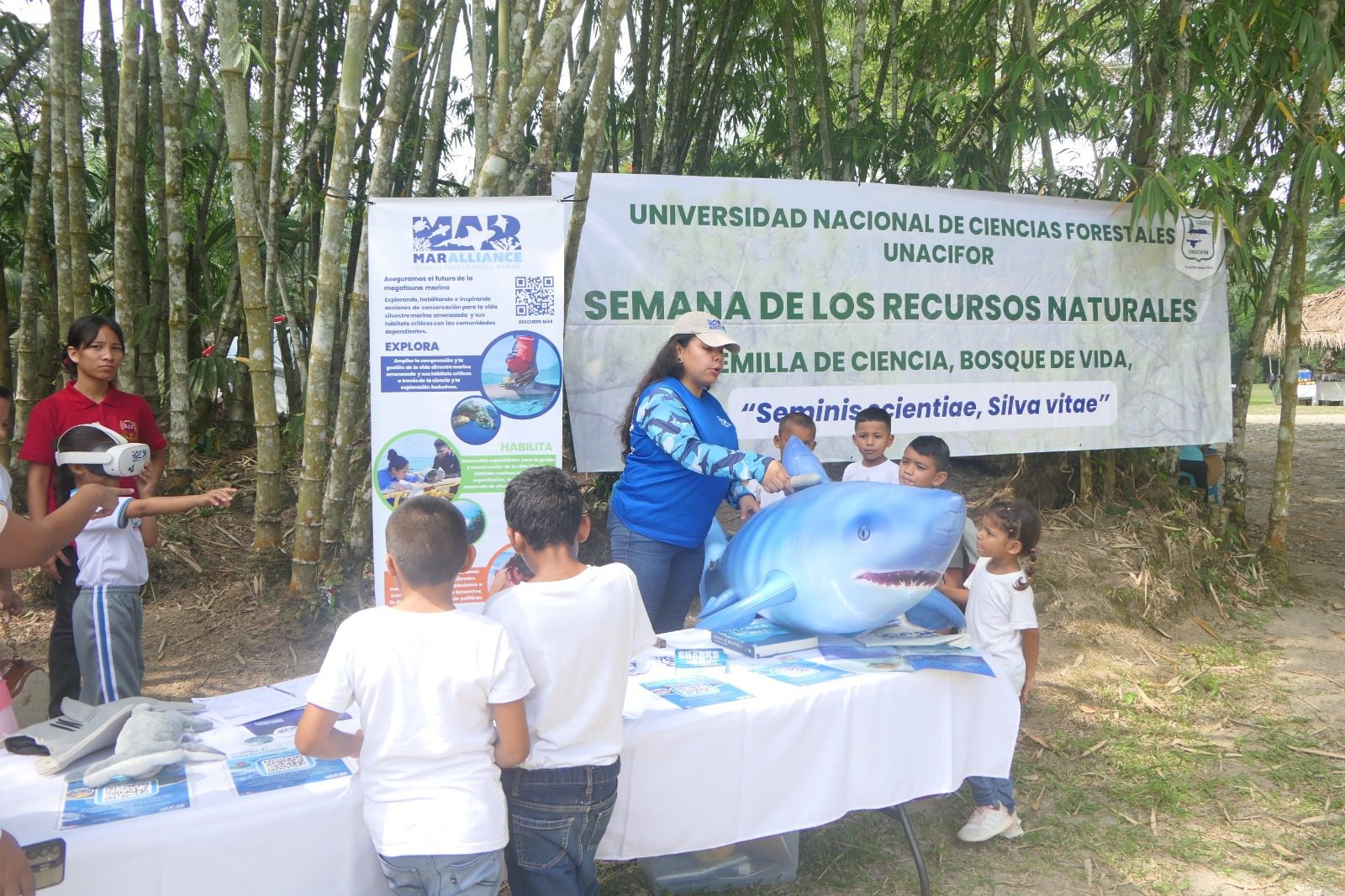
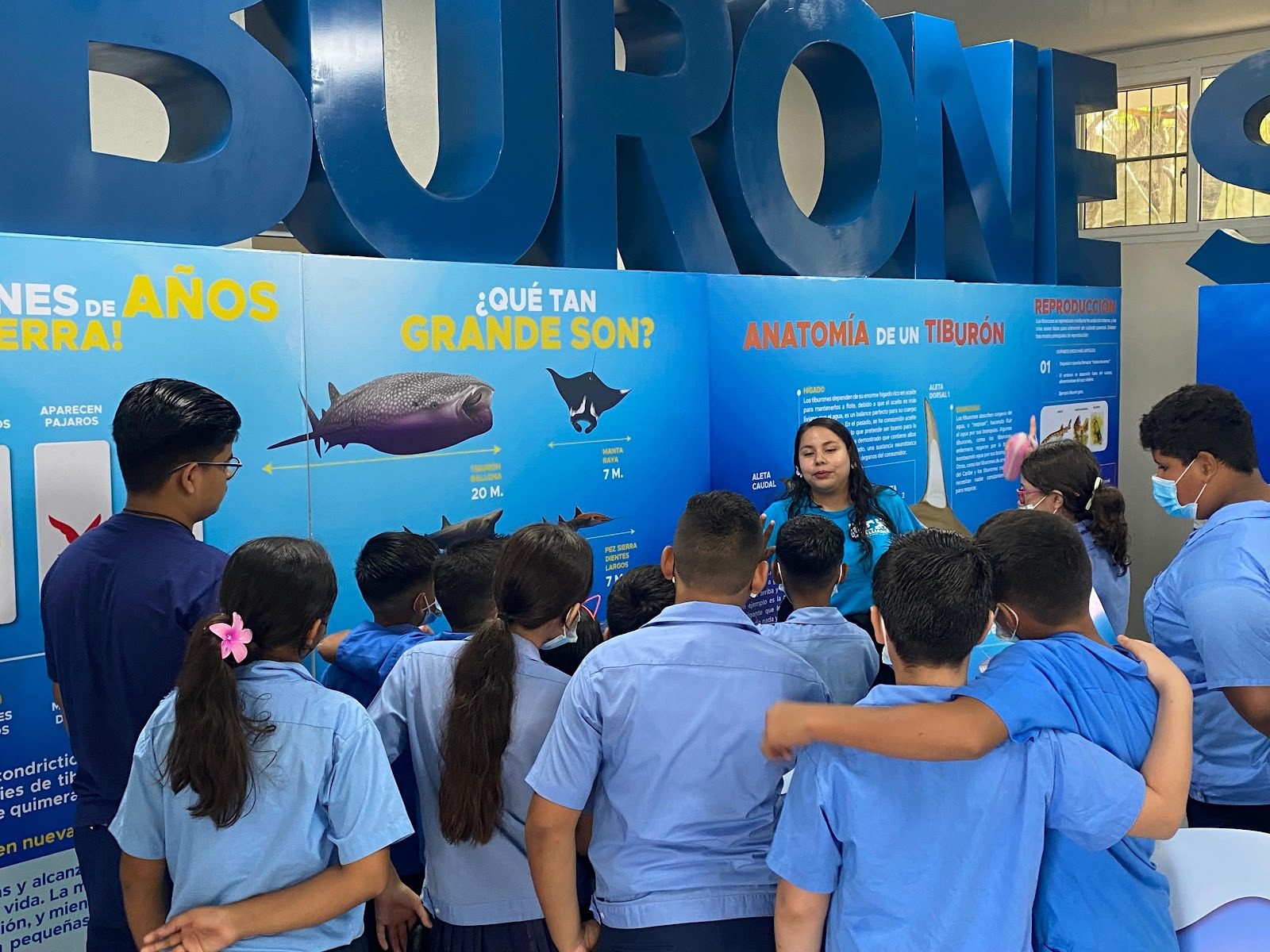
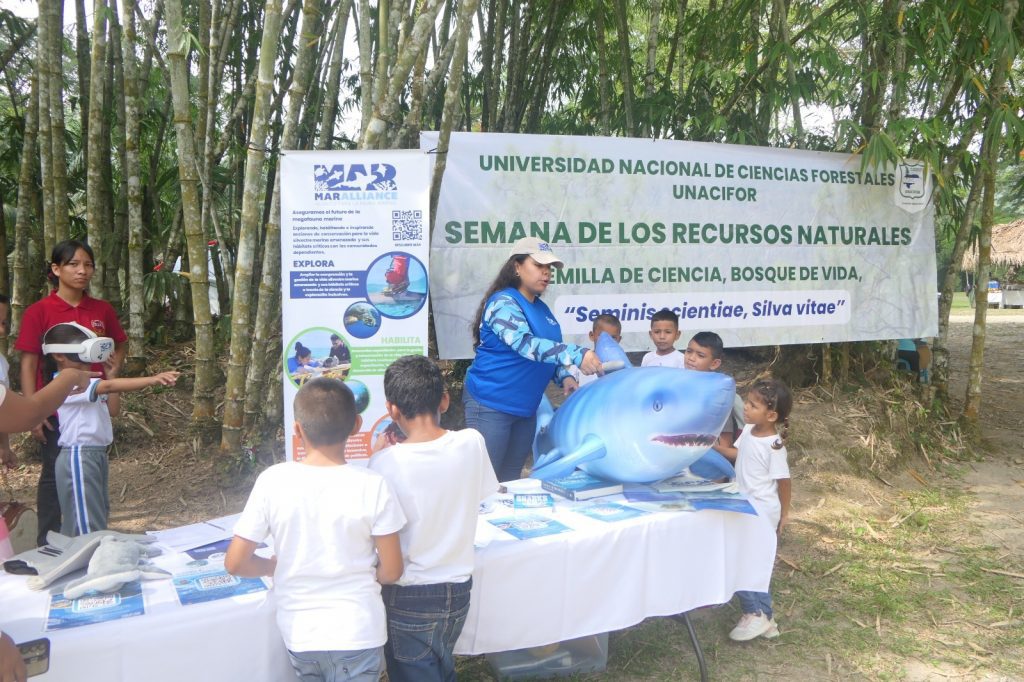
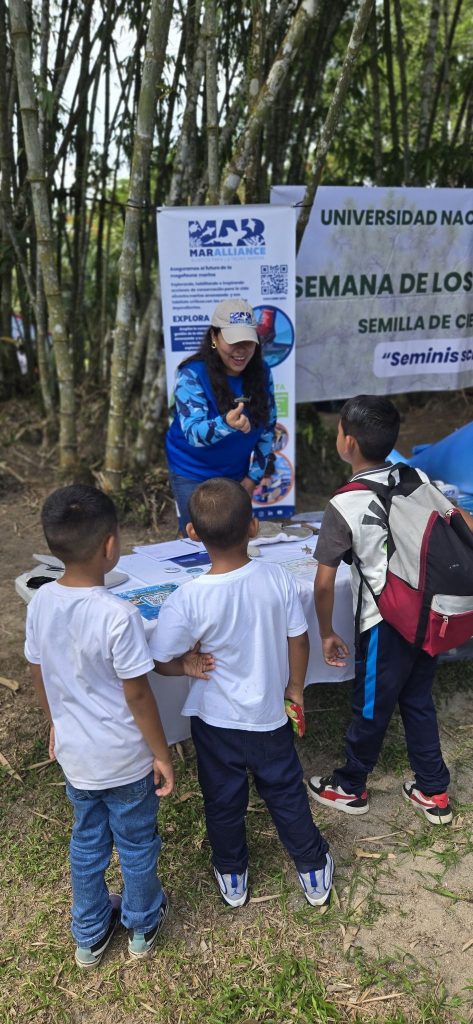
Right: Students from schools across Tela participate in an interactive demonstration on shark and ray biology and conservation. Photo: Claudio Montoya
Throughout the week, Honduras Azul demonstrated that marine conservation can be communicated in a more accessible, participatory, and meaningful way through virtual reality experiences, documentaries, educational activities, and forums for scientific dialogue designed specifically to bridge that gap. When people come to understand how the health of the oceans affects biodiversity, the economy, tourism, food security, and the well-being of communities, conservation is no longer seen as the sole responsibility of scientists or institutions.

At MarAlliance, we continue to work toward building a closer relationship between people and marine megafauna, fostering a culture of conservation that enables more and more Hondurans to understand that the future of the oceans also depends on the decisions we make on land.